
 EN
EN
 ar
ar bg
bg hr
hr cs
cs da
da nl
nl fi
fi fr
fr de
de el
el hi
hi it
it ko
ko no
no pl
pl pt
pt ro
ro ru
ru es
es sv
sv tl
tl iw
iw id
id lv
lv lt
lt sr
sr sk
sk sl
sl uk
uk vi
vi et
et hu
hu th
th tr
tr fa
fa ms
ms hy
hy ka
ka ur
ur bn
bn mn
mn ta
ta kk
kk uz
uz ku
ku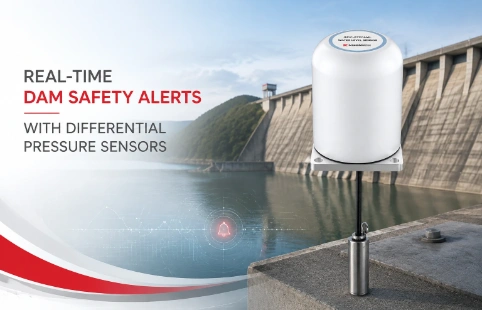
Real-Time Dam Safety Alerts with Differential Pressure Water Level Sensors
Key Takeaways An alert chain needs more than a sensor: define field in...

Weir Flow Meter System Integration That Fits Your Site
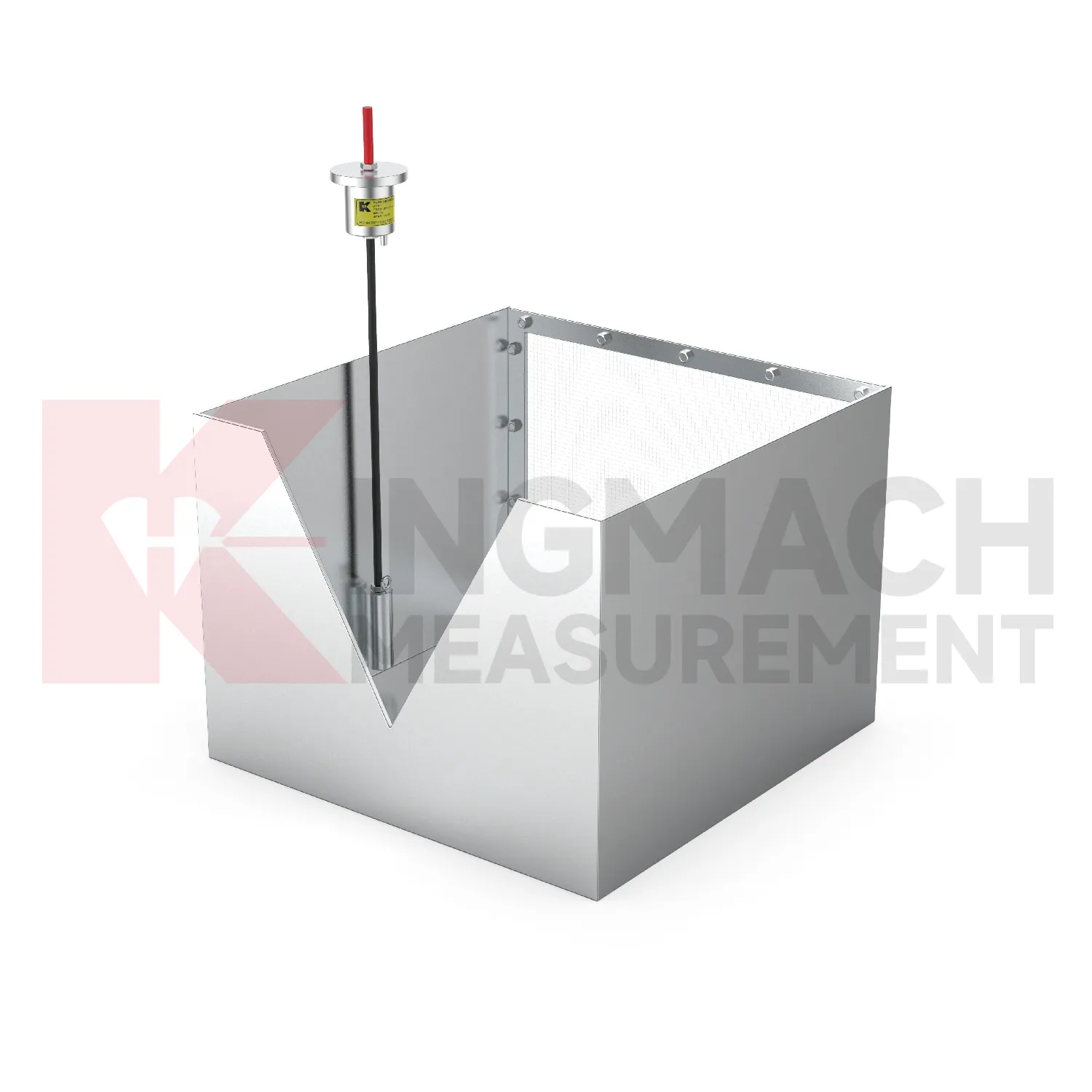
Open channel flow measurement rarely comes as a plug-and-play setup. Weir structures vary in shape, size, and approach conditions, and the monitoring target might be anything from clean water to industrial discharge. A standard flow meter kit often leaves gaps that a site-specific integration can close. At Kingmach, we start with your monitoring goal—accuracy class, data format, power supply, remote access—and then pull together the right sensor, mounting, and data-handling components. Because we manufacture many core elements ourselves, compatibility issues drop, and you get a system where the pieces actually work together. Our experience covers rectangular weirs, V-notch weirs, and compound sections, with support for local display, SCADA integration, or cloud-based logging. Whether you’re adding flow measurement to an existing structure or building a new monitoring station, the result is a weir flow meter system that matches the hydraulics and your reporting needs.
Technical Detail
Rather than offering a fixed-configuration weir flow meter, our team assembles each system around the specific channel and flow regime. Sensor selection is the starting point. Depending on head range and water quality, we typically go with a submersible pressure transmitter, an ultrasonic level sensor, or occasionally a non-contact radar unit. The transmitter can output 4–20 mA, Modbus, or SDI-12, depending on what your data logger or control room expects. Mounting hardware is fabricated to fit the weir plate and approach channel, and we include stilling wells or protective conduits where needed. For remote sites without mains power, we can integrate solar panels and battery-backed loggers with cellular telemetry. Kingmach’s in-house production covers many of these components—pressure transmitters, ultrasonic sensors, data loggers, and mounting brackets—which means less time chasing compatibility and more consistency across your fleet. This also simplifies after-sales support, since one point of contact handles sensor questions, configuration tips, and firmware updates. Over the years, we’ve integrated weir flow meters into irrigation districts, wastewater treatment plants, mining water management systems, and environmental monitoring networks. Each project brings its own challenges: high sediment loads that call for careful sensor placement, abrasive flows that require stainless steel wetted parts, or sites where local regulations demand a certain datalogger protocol. We handle those variables so that the delivered system aligns with your hydraulic conditions, not just a generic assumption. Commissioning typically includes a field check of the level-to-flow conversion formula, an inspection of the zero setting, and a walk-through of data trending—steps that catch mismatches before they become reporting errors. If you later need to expand the system with rainfall gauges or water quality probes, the logger and communication backbone can usually accommodate them without a full redesign. This build-to-fit approach takes a bit more coordination upfront, but the payoff is a weir flow meter system that keeps maintenance low and data reliable.
News
Key Takeaways An alert chain needs more than a sensor: define field in...
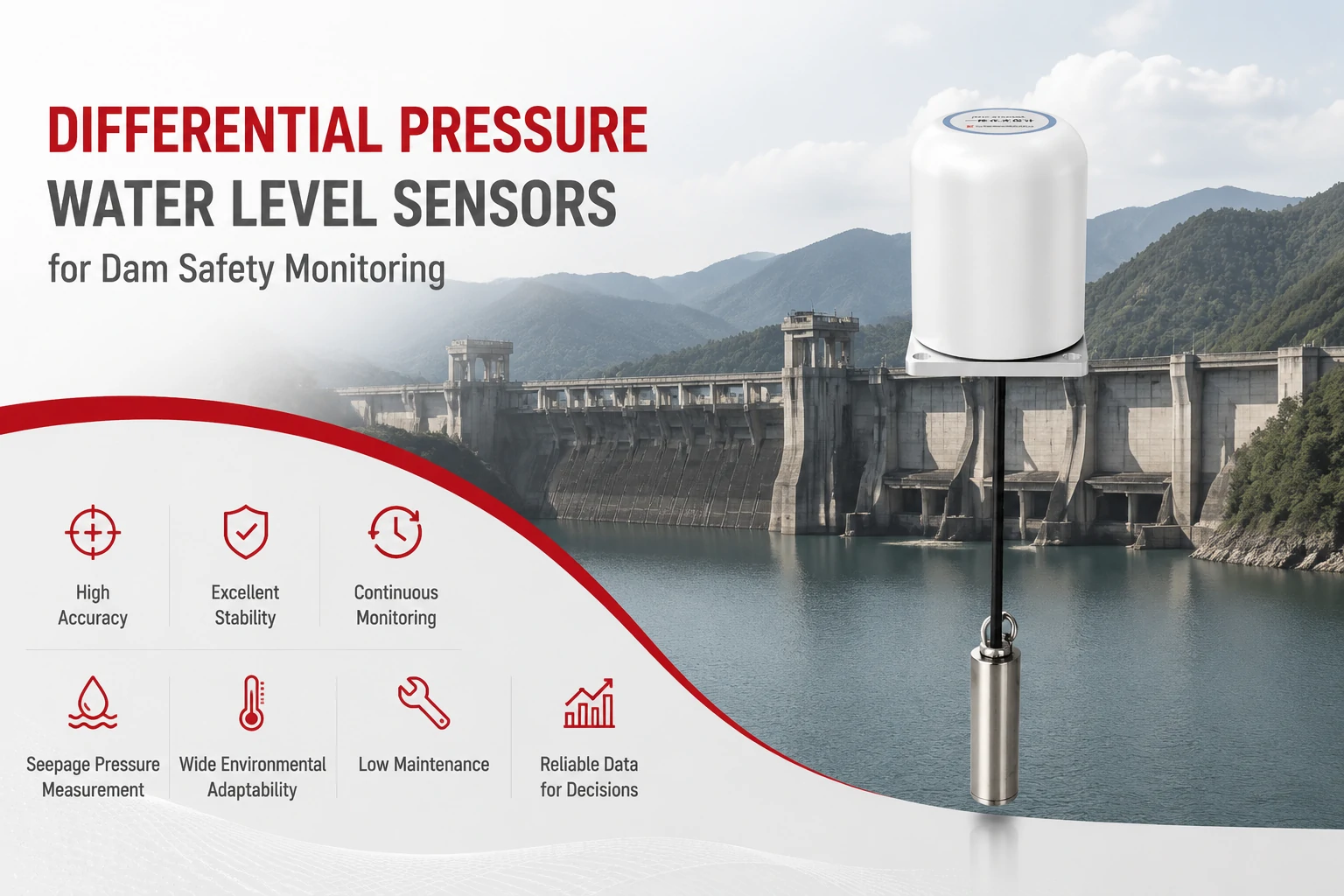
Key Takeaways The strongest fit is usually a confined, submerged, or s...
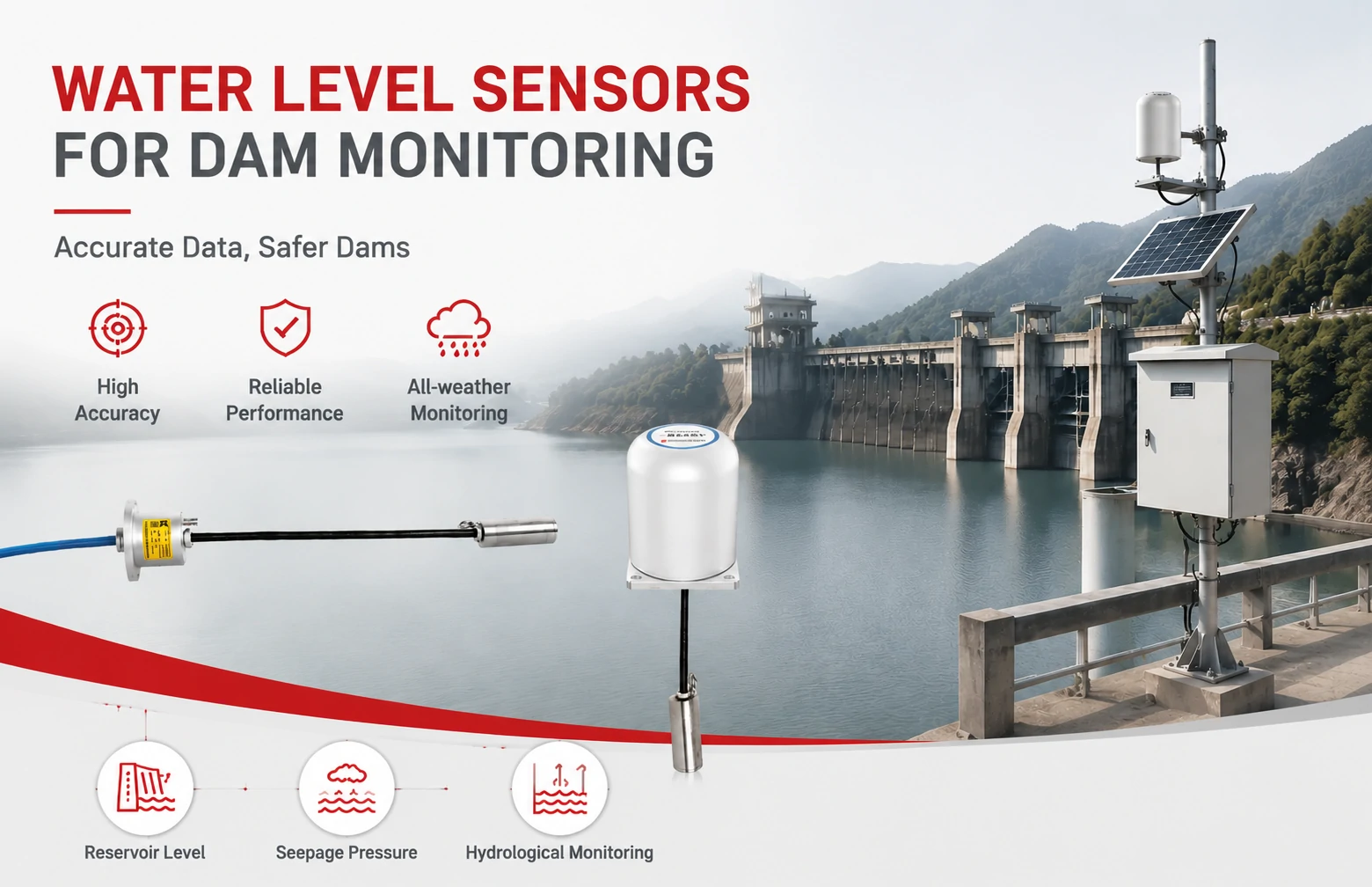
Kingmach Water Level Sensors for Dam Monitoring: A Buyer's Guide to Differential Pre...
Products
FAQ
Yes. We typically mount a pressure transmitter or submersible level sensor inside the stilling well, then cable it to a transmitter or logger outside. If the well is damaged or too narrow, a non-contact ultrasonic sensor aimed at the upstream free surface is an alternative. We match the sensor range and output to whatever recording device you’re using now, whether it’s a PLC, a SCADA RTU, or a standalone data logger.
Sediment accumulation in the upstream pool can shift the zero reference and lead to low flow readings. We often specify recessed-mount pressure sensors with a flushing port or add a small stilling pipe that shields the sensor from direct sediment drop-out. Periodic inspection and zero adjustment are still needed, but the system design can reduce the frequency and make cleaning easier.
When the weir is correctly installed and maintained—clean crest, proper ventilation, no approach velocity issues—standard pressure or ultrasonic sensors can deliver ±0.2% to ±0.5% of span on level measurement. Flow accuracy then depends on the weir equation; for a well-built V-notch or rectangular weir, total flow accuracy often lands in the ±2% to ±5% range under normal conditions. We help you pick a sensor with appropriate resolution so that level error doesn’t overshadow hydraulic uncertainty.
Yes. Our integrated system can include a cellular data logger that pushes readings to a cloud platform via MQTT, FTP, or a vendor API. We preconfigure the logger with your server details and a sample payload so your IT team can test the connection during commissioning. Most setups send 15-minute or hourly averages, but the resolution is adjustable.
We size a solar panel and battery combination based on the sensor and logger power draw, plus local sun hours. A typical setup uses a 20–50 watt panel and a 12 Ah to 40 Ah sealed lead-acid or LiFePO4 battery, housed in a weatherproof enclosure. The same enclosure can hold the logger and charger controller, so installation is mostly a single mounting bracket and cable run to the sensor.
Share your product type, target capacity, and application requirements. Our team can review the details and recommend a practical next step.
If you are interested in our products or want to become our partner.
Please leave your contact information, our team will contact you as soon as possible.
Mail: [email protected]
Contact Us: +8613808434127
Address: No. 188 Tongzipo West Rd, Changsha, Hunan, China